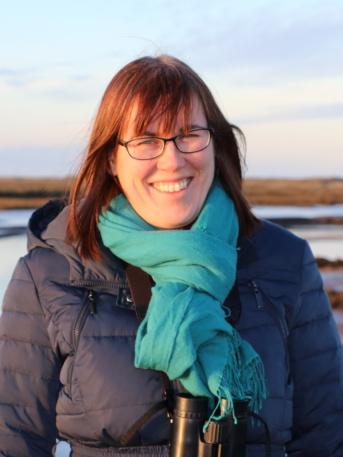
I sometimes style myself a data naturalist, because I am as intrigued by the detail of species distributions and populations as others are by taxonomy, evolution or behaviour. With an ever-increasing demand for increased quantity and quality of information about our natural environment, NFBR is a vital voice for the perspective and interests of biological recording and recorders. I too am an enthusiastic advocate for the benefits of increasing accessibility and participation in biological recording and also in improving data management, analysis and use of records and in developing recorders’ identification and field skills to sustain data quality.
As with many recorders, my love of nature has been with me since childhood and began with birdwatching; in more recent years I’ve been attempting to learn to record some invertebrates such as moths, hoverflies, and bees. I got a taste for working with biodiversity data from my final year project for my mathematics degree at Aberystwyth University, analysing counts from the Butterfly Monitoring Scheme. I followed a Masters in Mathematics in the Living Environment at York University with a PhD in Statistics at the University of Kent, supported by the Wildfowl & Wetlands Trust, on population indices for overwintering wildfowl.
My enthusiasm for the importance and value of ecological data and evidence in decision-making (plus a love of maps) expanded my attention from the challenges of monitoring species populations to recording their distributions. I worked in Local Environmental Records Centres, first as Data Manager at Kent & Medway Biological Records Centre and then as Manager establishing Cumbria Biodiversity Data Centre in the opposite corner of England. As this was housed at Carlisle’s Tullie House Museum, I had the added opportunity to appreciate first-hand the vital support local museum natural history departments give to recorders.
In November 2015 I joined the British Trust for Ornithology as the BTO/RSPB/JNCC Wetland Bird Survey (WeBS) National Organiser. WeBS is one of the longest running biodiversity monitoring schemes in the world and relies on thousands of skilled counters and a network of volunteer local organisers to collect monthly data on non-breeding waterbirds at coastal and inland sites. The scheme is especially important given the international importance of UK wetlands to many migratory waterbird populations.
My experience from sitting on the boards of the Association of Local Environmental Records Centres and the National Biodiversity Network Trust and the Council of Carlisle Natural History Society has helped me understand the ways biological recording is organised in this country at national and local levels. I’m continually astonished by the expertise and dedication of the naturalist community and the voluntary recording and monitoring work they do.